
Every other week, someone calls our office and says some version of the same thing: "I paid Rs. 25,000 for a template site last year, and it just isn't working. Can you redo it?" We get it. Templates look like the safe, cheap option. And sometimes they are. But more often, they end up costing the business twice — once for the template, and again when it's quietly rebuilt from scratch.
So let's actually break it down. Custom web design vs templates — when does each one make sense for a Sri Lankan business?
What you really get with a template
A template (think WordPress themes from envato, or Wix/Shopify out-of-the-box layouts) is fast and cheap. You can be live in a week. For a small side-business, a personal portfolio, or a very early-stage idea, that's perfectly fine. We've recommended templates to plenty of clients who simply weren't ready for more.
But templates have real downsides that show up later:
- They look like a thousand other sites. Customers can tell. Trust takes a hit, especially in competitive spaces like hotels, fashion or interiors.
- They're slow. Most themes load every feature whether you use it or not. Speed scores suffer, SEO suffers, conversions suffer.
- They limit you. Want a custom booking flow, a special product configurator, or a CRM integration? You're now fighting the theme instead of using it.
- Maintenance gets messy. Updates break things. Plugin conflicts pile up. We've inherited template sites where the only fix is to start over.
What custom web design gives you
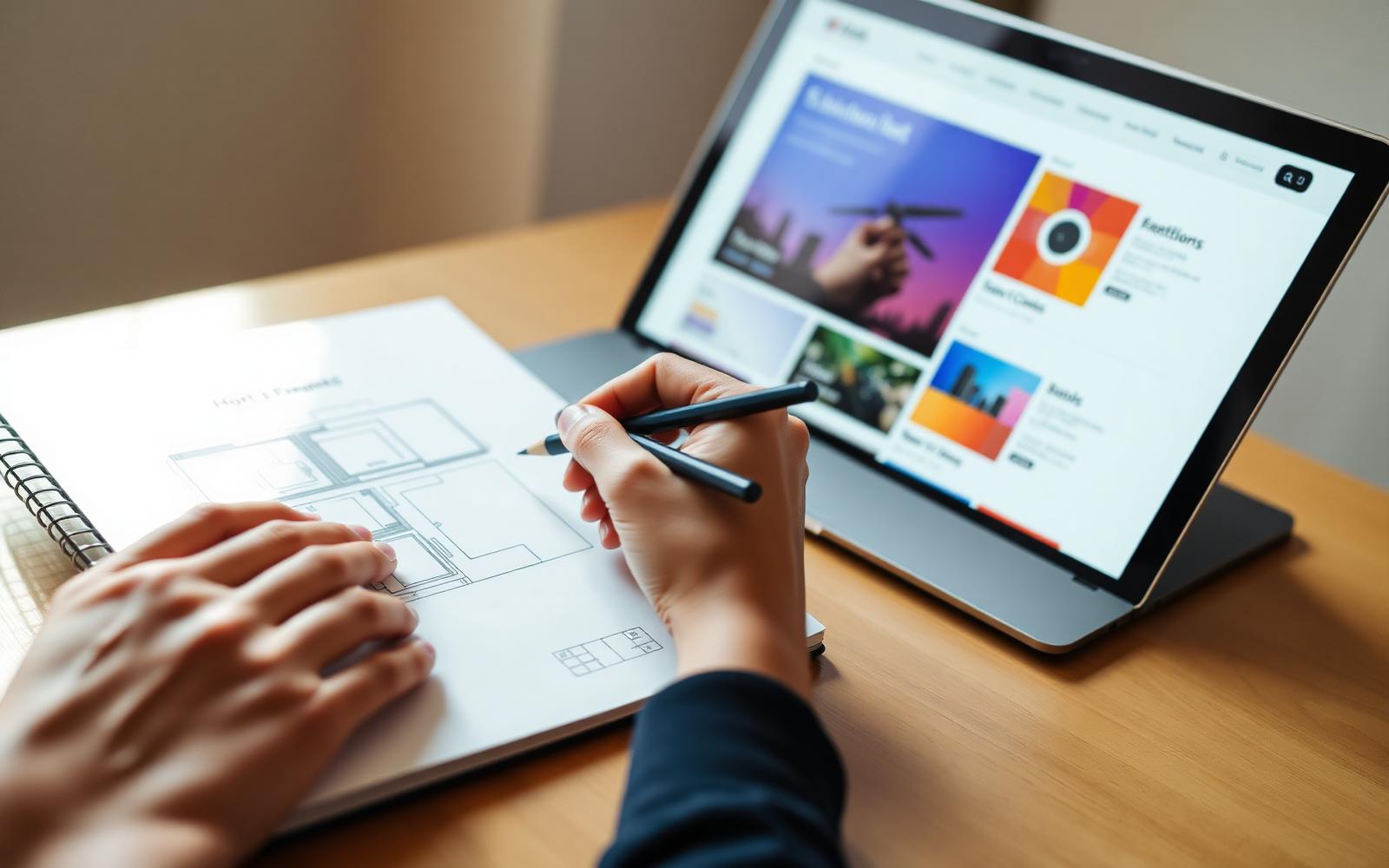
A custom-designed website is built around your business — not the other way around. Your brand colors, your tone, your products, your customer journey. We sketch wireframes specifically for the way your customers think.
The practical benefits we see across our clients:
- Faster pages. No bloated theme code. We only load what the page needs.
- Better SEO performance. Clean markup, proper schema, fast Core Web Vitals — all things our SEO team can actually work with instead of fighting against.
- Higher conversions. The layout, the copy and the CTAs are designed for your audience, not a generic global template buyer.
- Real growth capacity. Adding a new section, a new language, a new product range — all simple, because the foundation was built right.
- Genuine brand differentiation. Your site looks like you, not a slightly recolored demo someone else is also using in Dehiwala.
So when is custom worth it?
Honestly, it comes down to three questions:
- Is the website meaningful to how the business makes money? (Leads, bookings, orders, brand trust)
- Will the business be around in 3+ years, and want to grow online during that time?
- Is there anything specific to your business that a template can't quite handle — multi-language, custom forms, a real ecommerce flow with local payment and courier integration?
If you nodded yes to two of those, custom is almost certainly the smarter long-term decision.
What custom design costs in Sri Lanka
We don't hide this. A simple custom brochure site in Sri Lanka usually starts around Rs. 75,000–120,000. A small custom ecommerce store typically lands between Rs. 200,000 and 400,000 depending on integrations. Larger systems — multi-vendor marketplaces, booking engines, web apps — scale from there.
It sounds like a lot until you compare it to the cost of not converting a few extra customers a month for the next three years. Most clients pay the build off within months, not years.
The honest middle ground
Sometimes the right answer isn't fully bespoke either. We often build "semi-custom" sites — a solid framework (like a well-chosen CMS) with a fully custom front-end design layered on top. You get the speed of a custom-feeling site without the price tag of building every backend feature from scratch. Pair that with a small monthly maintenance plan and you've got something that lasts.
Final thought
Templates are a shortcut. Custom design is an investment. Neither is wrong — what's wrong is paying for the wrong one for your situation. If you're trying to decide between the two, we're happy to look at where your business is and give you a straight answer. Send us a message with a bit about what you're building and we'll tell you honestly which way to go.